Stretching is a simple yet powerful way to improve your physical health and mental well-being. Whether you’re looking to increase flexibility, reduce muscle tension, or simply relax after a long day, stretching at home can be a great addition to your routine. If you’re new to stretching, this beginner’s guide will walk you through the benefits, basic techniques, and easy stretches you can do without any special equipment.
Why Stretching Matters
Stretching helps lengthen your muscles and improve your range of motion. When done regularly, it can:
– Increase flexibility and mobility
– Reduce muscle stiffness and soreness
– Improve posture and balance
– Enhance circulation
– Relieve stress and promote relaxation
By incorporating stretching into your daily routine, you can support your body’s natural movement and prevent injuries.
Getting Started: What You Need
One of the best things about stretching at home is that you don’t need fancy equipment. Here’s what you’ll want to have ready:
– Comfortable clothing: Wear something that allows you to move freely.
– A flat surface: A yoga mat or carpeted floor works well to provide cushioning.
– Water: Keep hydrated before and after stretching.
– Optional props: A strap, towel, or foam roller can help with deeper stretches but are not necessary.
When to Stretch
For beginners, the best times to stretch are:
– After waking up: Gentle stretches can help you become more alert and energized.
– Before or after exercise: Stretching warms up your muscles and helps you cool down.
– During breaks: If you sit for long periods, short stretching sessions can reduce tension.
– Before bed: Relaxing stretches may improve sleep quality.
Stretching Tips for Beginners
To get the most out of your stretching routine, keep these tips in mind:
– Warm up first: Stretching cold muscles isn’t recommended. Try a few minutes of light activity like walking or marching in place.
– Move slowly and gently: Avoid bouncing or forcing a stretch. You should feel mild tension, not pain.
– Breathe deeply: Focus on slow, even breaths to help your muscles relax.
– Hold stretches for 15-30 seconds: This allows your muscles to lengthen effectively.
– Stretch both sides evenly: Balance is important for muscle health.
– Be consistent: Aim for at least 3-4 stretching sessions per week.
Basic Stretches to Try at Home
Here are some beginner-friendly stretches targeting major muscle groups.
1. Neck Stretch
– Sit or stand tall.
– Gently tilt your head toward your right shoulder until you feel a stretch on the left side of your neck.
– Hold for 20 seconds, then switch sides.
2. Shoulder Rolls
– Sit or stand with your back straight.
– Slowly roll your shoulders forward in a circular motion 10 times.
– Reverse and roll backward 10 times.
3. Chest Stretch
– Stand facing a corner or door frame.
– Place your hands on the wall or frame at shoulder height.
– Step one foot forward and lean in slightly until you feel a stretch across your chest.
– Hold for 20 seconds, then relax.
4. Seated Hamstring Stretch
– Sit on the floor with your legs straight in front of you.
– Slowly reach toward your toes, keeping your back straight.
– Hold for 20-30 seconds.
– If you can’t reach your toes, reach as far as comfortable.
5. Quadriceps Stretch
– Stand near a wall or chair for support.
– Bend your right knee and grab your ankle behind you.
– Gently pull your foot toward your buttocks until you feel a stretch in the front of your thigh.
– Hold for 20 seconds, then switch legs.
6. Cat-Cow Stretch (for spine mobility)
– Start on your hands and knees.
– Inhale and arch your back, lifting your head and tailbone (Cow pose).
– Exhale and round your back, tucking your chin and tailbone (Cat pose).
– Repeat 5-10 times slowly.
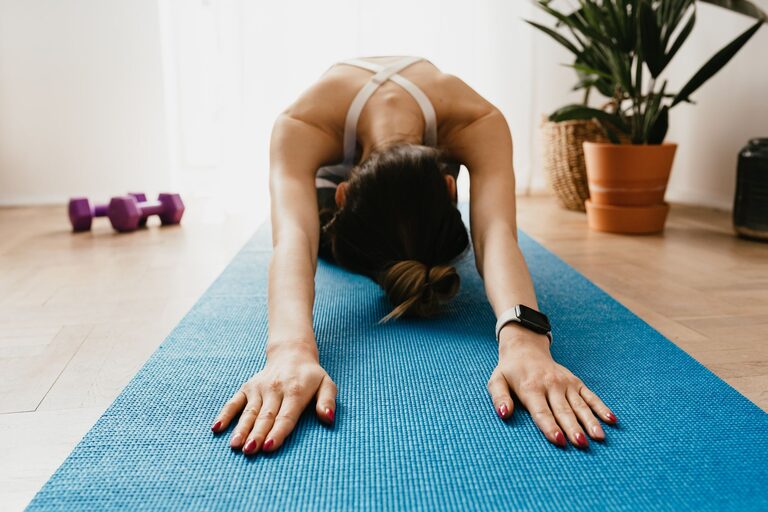
7. Child’s Pose
– Kneel on the floor, sit back on your heels.
– Stretch your arms out in front of you and lower your forehead to the floor.
– Hold as long as comfortable for relaxation.
Creating Your Stretching Routine
Begin by choosing 4-6 stretches that feel good and target areas you want to improve. Here is a sample beginner routine you can follow:
- Neck stretch — 20 seconds each side
- Shoulder rolls — 10 forward, 10 backward
- Chest stretch — 20 seconds
- Seated hamstring stretch — 30 seconds
- Quadriceps stretch — 20 seconds each leg
- Cat-Cow stretch — 10 rounds
- Child’s pose — 30 seconds for relaxation
Perform these stretches slowly and calmly. You can do this routine daily or every other day depending on your schedule.
Common Mistakes to Avoid
– Holding your breath: Remember to breathe deeply and smoothly.
– Overstretching: Stretching should never cause sharp pain or discomfort. Respect your body’s limits.
– Ignoring postural alignment: Try to keep your spine straight and avoid slouching during stretches.
– Skipping warm-up: Stretching cold muscles can cause injury. Warm up first with light movement.
When to Consult a Professional
If you have existing medical conditions, injuries, or persistent pain, talk with a healthcare provider or physical therapist before starting a new stretching routine. They can recommend safe techniques tailored to your needs.
Final Thoughts
Stretching at home is a convenient and effective way to support your body’s health and promote relaxation. By starting with simple stretches and paying attention to your body’s signals, you can develop a sustainable habit that benefits both your muscles and mind.
Remember to be patient and consistent. Over time, you’ll notice improved flexibility, reduced tension, and a greater sense of well-being — all from the comfort of your own home. Happy stretching!
About the Author